


The lioness I followed – And the lioness I became.
I first met White Dot on the 1st of January, 2011.
The grass was long, green, and heavy after summer rains, covering most of the pride as they lay scattered through the clearing. Twenty-nine lions in total. And amongst them, resting quietly, was White Dot. At the time, she was still a young lioness, as was I.
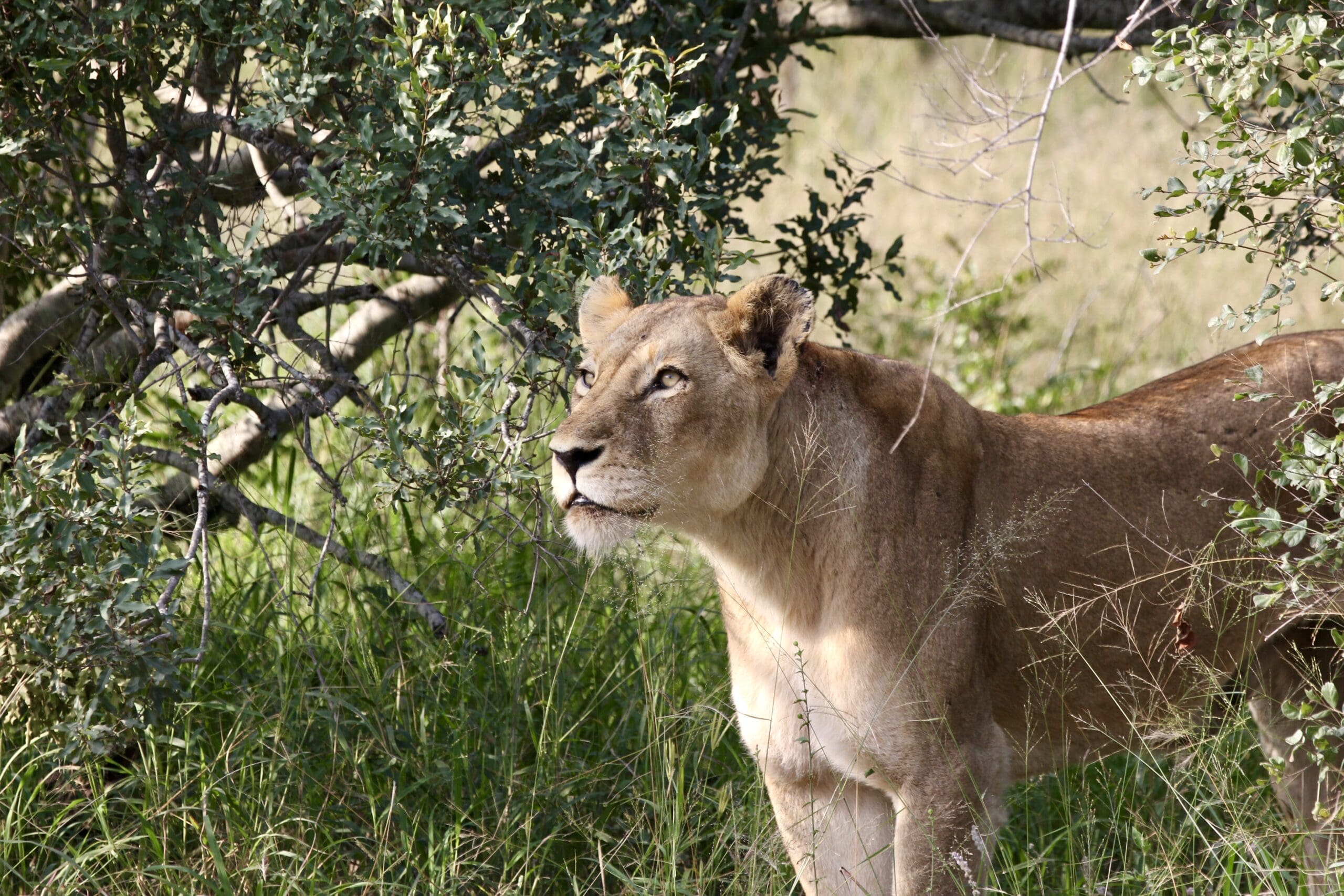
She was raising what we believed to be her first litter then. Even at that age, she was already noticeably large – broad-headed, wide shoulder muscles, and physically large, even when compared to full grown males. She was highly involved within the pride structure. She played regularly with cubs, took part in hunts as one of the main chasers, groomed across all members of the pride, and did not hesitate to discipline young lions when needed – teaching structure early.
Even then, the early signs of dominance were obvious. The pride tended to orient around her naturally, greetings of head rubs on every encounter, arrival or missed hunt – a clear signal of respect and connection. She was aware and consistent.
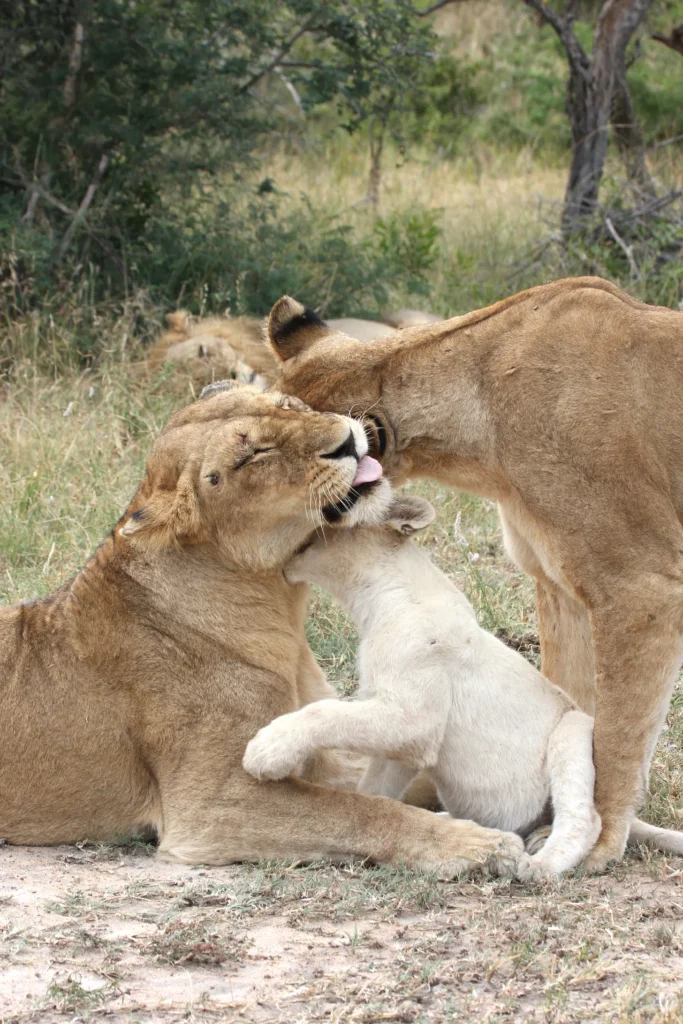
From an early stage, there were quiet lessons in the way she lived for me: discipline was a matter or life – there are no second chances out here, care that was full, and zero fear when it was ‘go’ time. She had an ability to move while still remaining fully present to the needs of her pride, nearly like she had eyes on the back of her head.
Survival for lions is never guaranteed. The environment is highly competitive – between rival prides, incoming males, hyenas, prey availability, drought, and injury. White Dot still managed to raise cubs successfully and keep her position within a large, stable pride over many years.
Over time, she became a consistent presence in the area. Eventually, she was recognised as one of the key females within what became known as the Birmingham Pride, a large and well-established pride known for taking down buffalo and, at times, giraffe and eventually successfully raising white lion cubs.
As the pride evolved, White Dot remained a central figure – large, physically powerful, and experienced. Seasons changed, coalitions and males came and went, cubs grew into adults, and new generations followed. Through all of that, she stayed in a leadership role within the pride structure.
There were further lessons for me in this phase of her life: the understanding that sacrifice is sometimes required for the greater stability of the group, and that strength is not only about dominance, but about holding responsibility over time without collapsing under it. She also showed me that there is a place for walking alone in your own power – confident, self-contained, and certain but equally, knowing when to call on others, and when connection is necessary for survival.
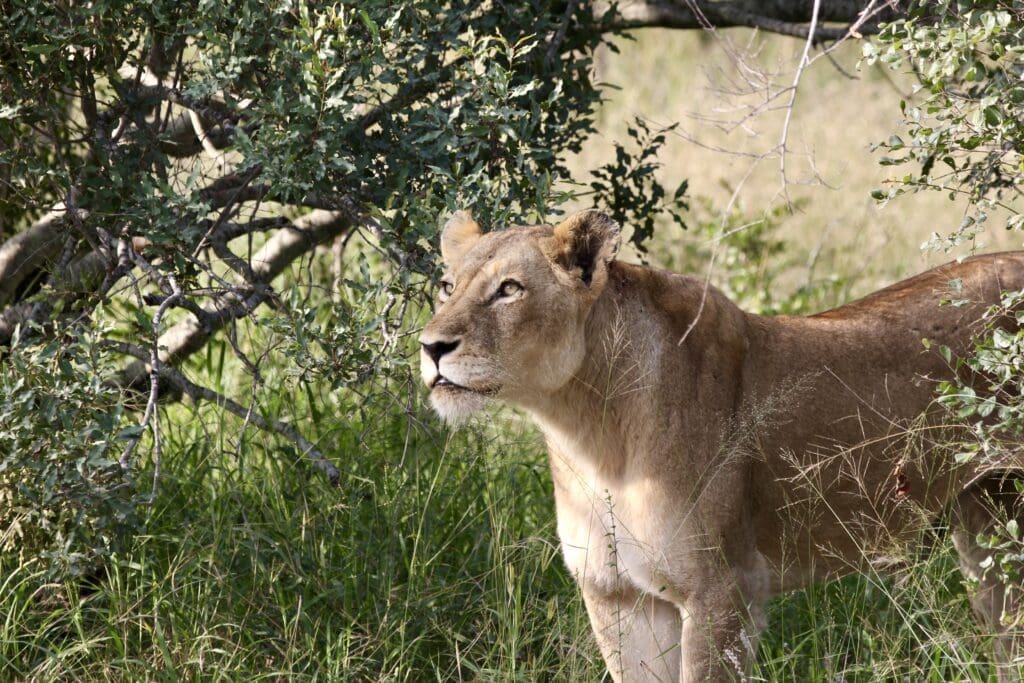
White Dot became an anchor for me in a time of my life that I needed her. She guided me in a way that you don’t really think a wild animal could, but through observing her I learnt my own mental and physical power and I finally learn the importance of discipline. She became a mentor to me.
Through years of following her and the pride, I became familiar enough with the individuals that I gave her the name “White Dot,” after the small white patch of fur on her hip. Over time, she became one of the animals I consistently looked out for in the bush. I often had to consciously redirect attention on game drives, because I had to show my guests other animals. I could have followed her all day, unless she was off the concession in the Kruger side or westwards to the Timbavati. They would sometimes be gone for weeks, but Richard and I would always check their preferred game paths, waiting in anticipation for their return to the property.
What stood out most about her was not just behaviour, but her consistency. She was reliable in her role within the pride, disciplined, steady in her responses, and able to maintain her position through multiple changes in environmental pressure and pride dynamics. She existed in a powerful, male-dominated world, yet held her space with quiet certainty and strength. Over the years, as she matured into a mother and a central figure within the pride, I too was finding my place as a woman in spaces that often demanded resilience, confidence, and endurance. Eventually, I became a (strict) mother as well. In many ways, while I was watching White Dot grow into the lioness she would become, I was becoming one too.
In moments of doubt or weakness, I often find myself asking:
What would White Dot do? (I even have it written on a note on my office wall).
White Dot passed away last year in the Timbavati riverbed, an area she had used frequently over the years. She denned every litter (I know) of in that riverbed a place that had held so many of her cycles of life, and in the end, became where she finally came to rest. In the months leading up to her passing, it was clear she was losing strength, and I had come to accept that her time was nearing. In lion dynamics, when a pride begins to leave an individual behind, it is often a quiet indication that the end is close.
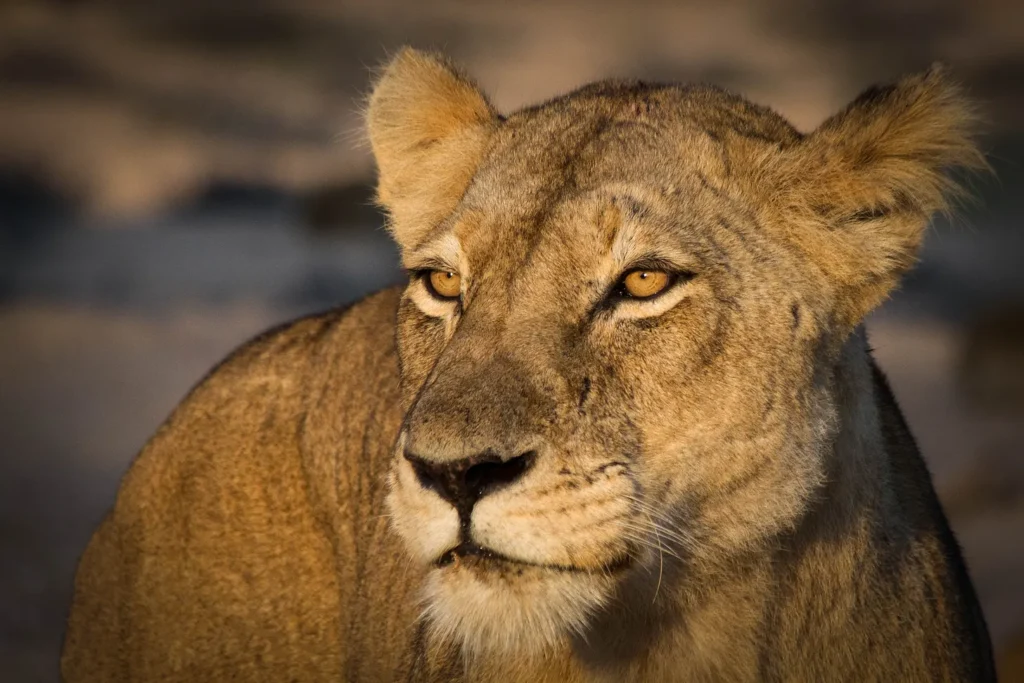
The weeks waiting for confirmation of her passing were difficult in a way that is hard to describe. Not because of the death itself – I have witnessed that many times in the wild – but because it felt like the slow loss of a teacher, and with her, a deep thread of connection to this landscape that we had shared for so long.
It was my tracker, Richard and White Dot who anchored me through 16 years here on this land I still live on in the Kruger National Park. After Richard passed away in 2021, that role was held even more strongly by White Dot. It is still hard to know she is gone, but I choose to honour her life through these stories.
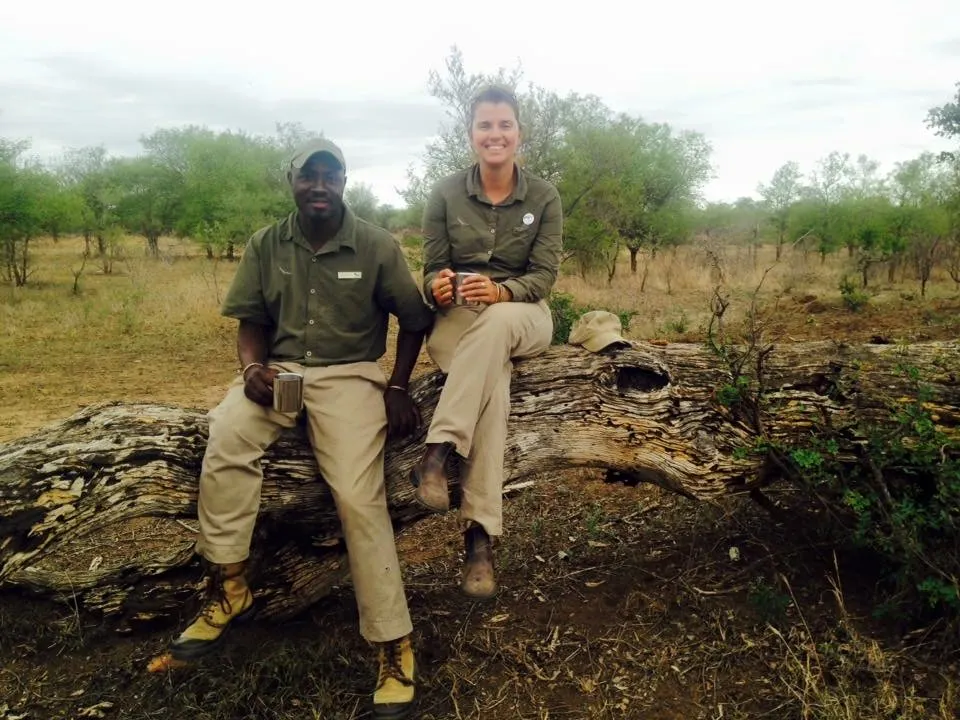
Looking back to that first encounter in 2011 – the wet grass, the sheer size of the pride, and a young lioness already firmly established within it – I realise now that I was growing alongside White Dot in more ways than I understood at the time.
What began as a single sighting in the long summer grass became the beginning of more than a decade of observation, connection, and an unexpected parallel journey between a lioness and myself.
I know that I will never have the chance to spend time with another lioness like her. She raised countless lions and lionesses who went on to inhabit competitive parts of the Kruger and Sabi Sands. She was the glue that held the Birmingham Pride together for so many years. Long may her teachings live on in the lions who shared space with her – and in the humans who had the privilege of observing her.
To the Queen, a life well lived.
Leave a Reply
BREATHEAFRICATRAVEL
Discover expert travel insights, wildlife stories, conservation updates, and inspiration for your next African adventure.
Join Our Substack

